How should a concrete placing boom be selected for muddy, soft ground—crawler-mounted or wheeled placers?
Here is the answer upfront: for muddy, soft, or uncompacted base layers, prioritize a crawler-mounted hydraulic concrete placer; mobile (wheeled) units should only be considered for projects with hardened surfaces that require frequent relocation between multiple pouring points. Choosing the wrong chassis comes at a steep price—not merely slower progress, but the risk of getting bogged down mid-operation and forcing the entire pouring line to a standstill.
First, assess the site conditions: muddy, soft, or unfinished sub-bases—each presents its own set of pitfalls.
"Soft" and "muddy" are often conflated, but they require distinct approaches: a surface that has turned to muck after rain, a newly backfilled area that hasn't been compacted, or a sub-base where the bedding layer isn't finished—all share the traits of low load-bearing capacity and a surface that fails under pressure. When equipment is positioned there, the points of contact—whether outriggers or tires—are the first to collapse. Field assessment is actually simple: does a person leave a distinct footprint when stepping on it? Does a heavy object sink when it rolls over? If the answer is yes, treat it as soft ground—don't take the risk.
Crawler-mounted units excel at stability: they distribute weight over a wide contact area and can move while pouring.
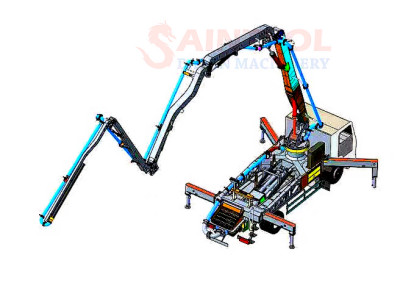
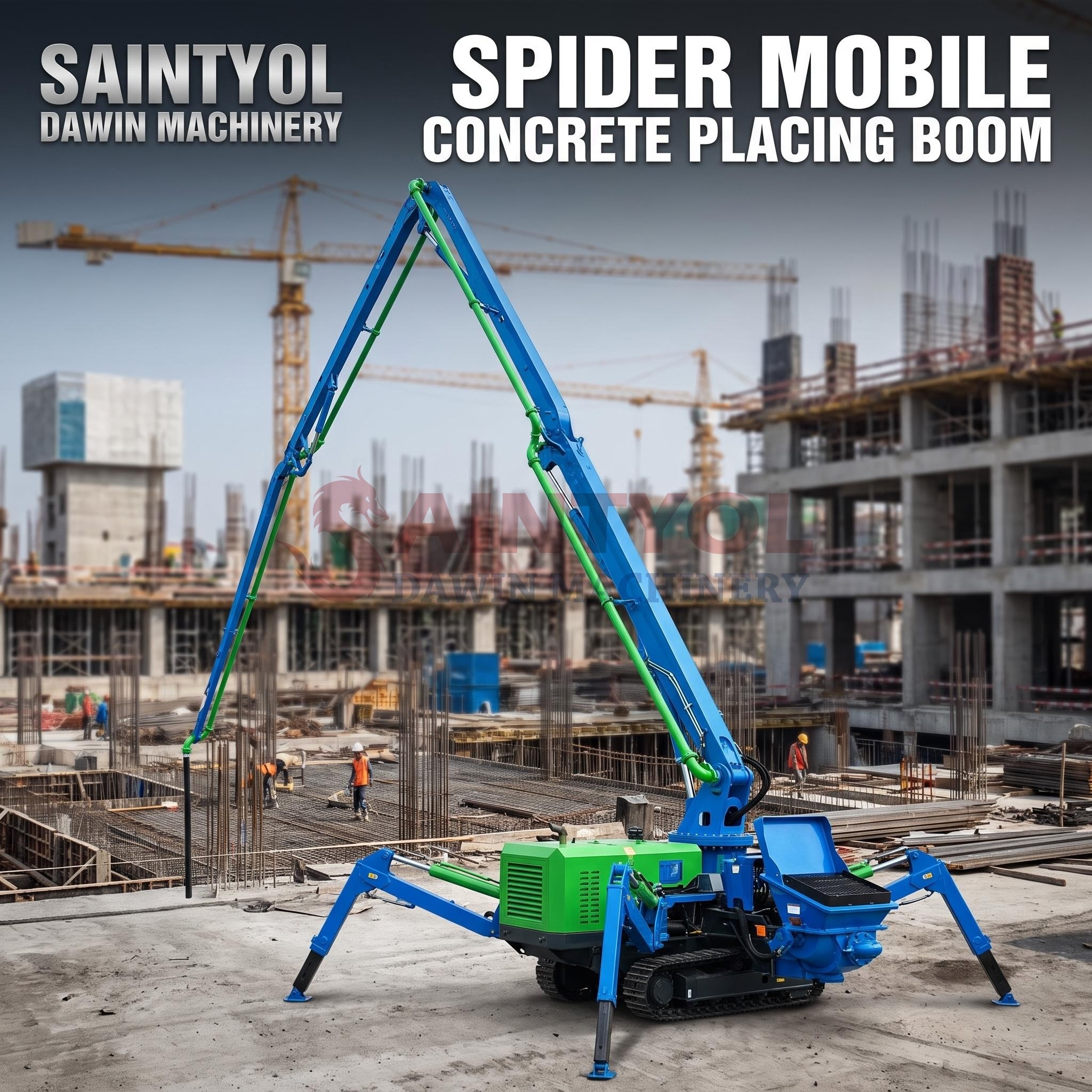
Crawler tracks spread the machine's weight over a larger contact area, making it less likely to sink—this is their fundamental advantage on soft ground. Even more critical is their ability to move while pouring; there is no need to repeatedly deploy and retract outriggers or reposition the unit. It can simply advance along the pouring face, ensuring a continuous workflow. Saintyol DAWIN crawler-mounted hydraulic concrete placer follows this design philosophy: travel, slewing, and boom movements are all hydraulically driven, allowing it to stand and move steadily even on unfinished sub-bases while delivering concrete to every pouring point.
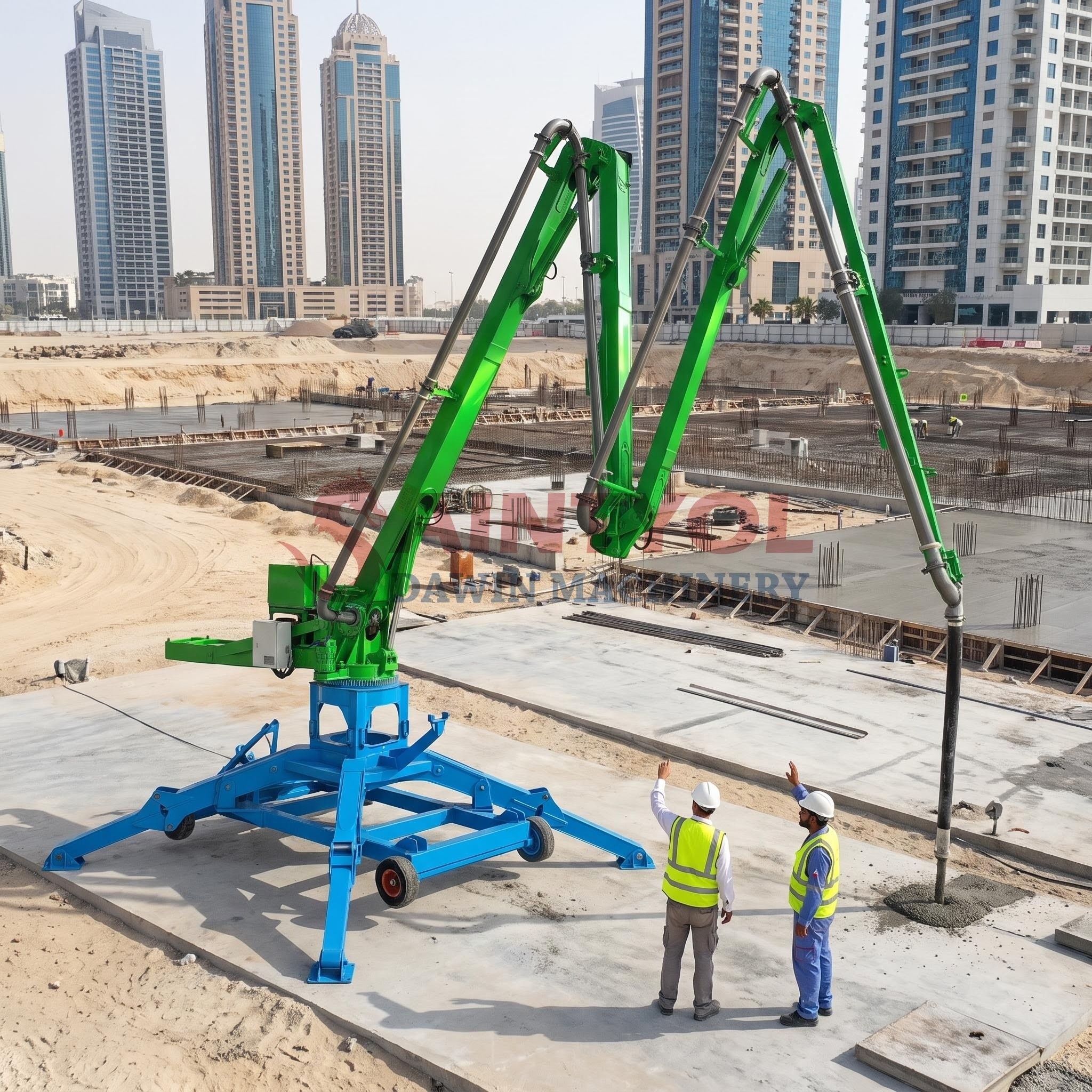
Wheeled mobile units excel at rapid relocation: they thrive on hard ground but require caution on soft terrain.
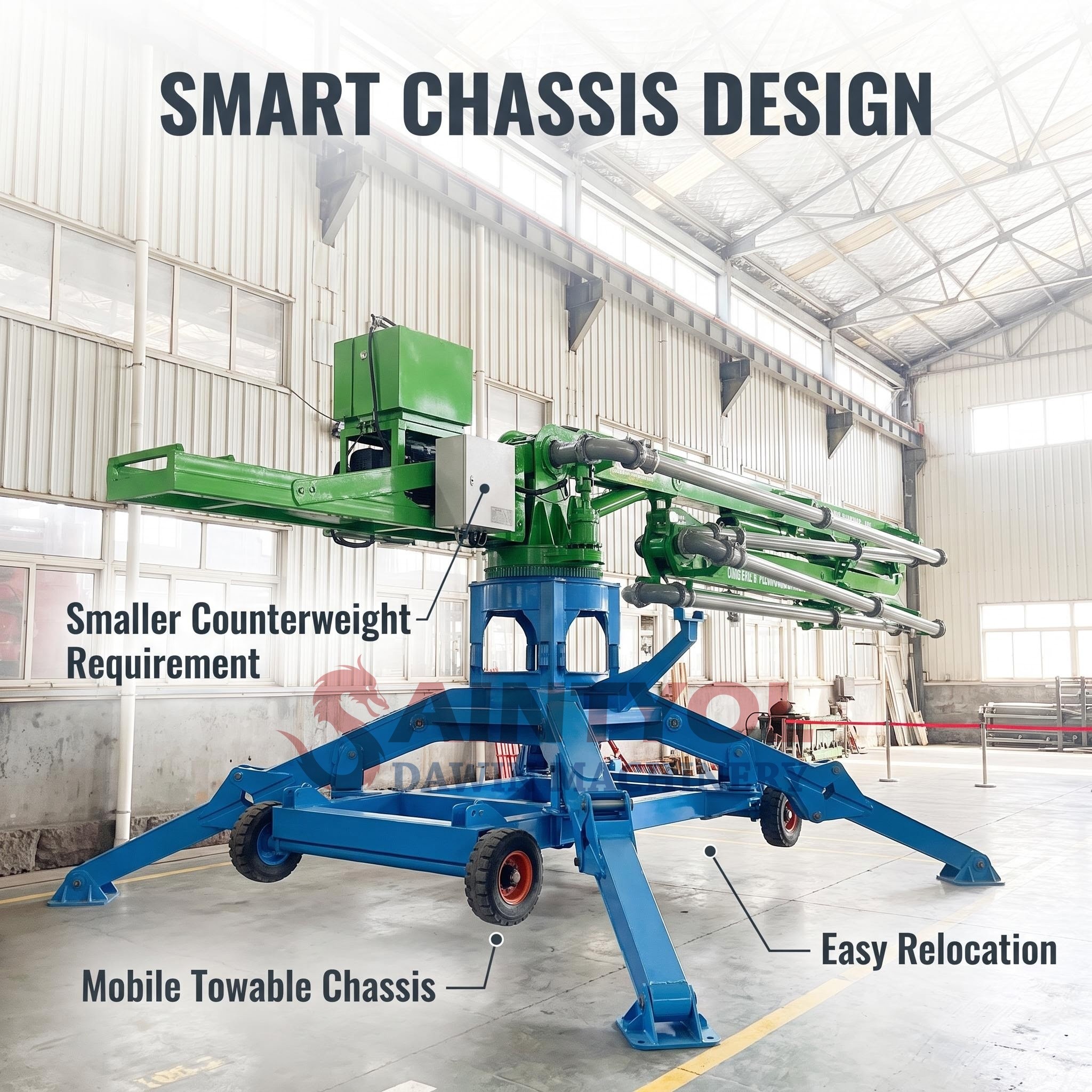
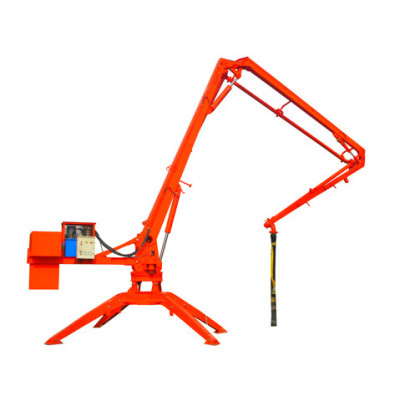
The value of wheeled mobile units lies in their mobility. On sites with hardened flooring where the machine must shuttle between multiple work points, they offer superior efficiency and easier relocation. However, because their contact points are concentrated, they are prone to slipping or sinking on muddy or soft sub-bases. Once stuck, a recovery vehicle might not be able to reach them, forcing the entire pouring operation to halt. It isn't that wheeled units are flawed; it’s simply a matter of matching the equipment to the site conditions.
The bottom line: for soft ground, long work faces, and continuous advancement, choose crawler-mounted units; for hard ground, quick, frequent operations, and moving between multiple points, choose wheeled mobile units. Most large-scale ground pouring projects—such as flooring, open yards, runways, and newly backfilled sites—fall into the former category. Saintyol DAWIN Machinery specializes in the R&D and manufacturing of complete hydraulic concrete placing booms, with every unit undergoing factory testing; our crawler-mounted hydraulic placing booms ensure stability and steady movement on muddy or soft terrain, keeping your pouring operations on schedule. Send us details about your job site conditions, and we will help you determine the right equipment for the job.